
Tap Cycle Maximize in the bottom toolbar to inspect each occupied pane. After the last pane, tap once more to return to the original arrangement.
Start with the full workspace
Check that both clips are loaded in your chosen layout. The maximize control acts on the occupied panes of this workspace.

Enlarge the first pane
Tap Cycle Maximize, shown with outward arrows inside a frame. The first occupied pane expands, and the toolbar shows its index.
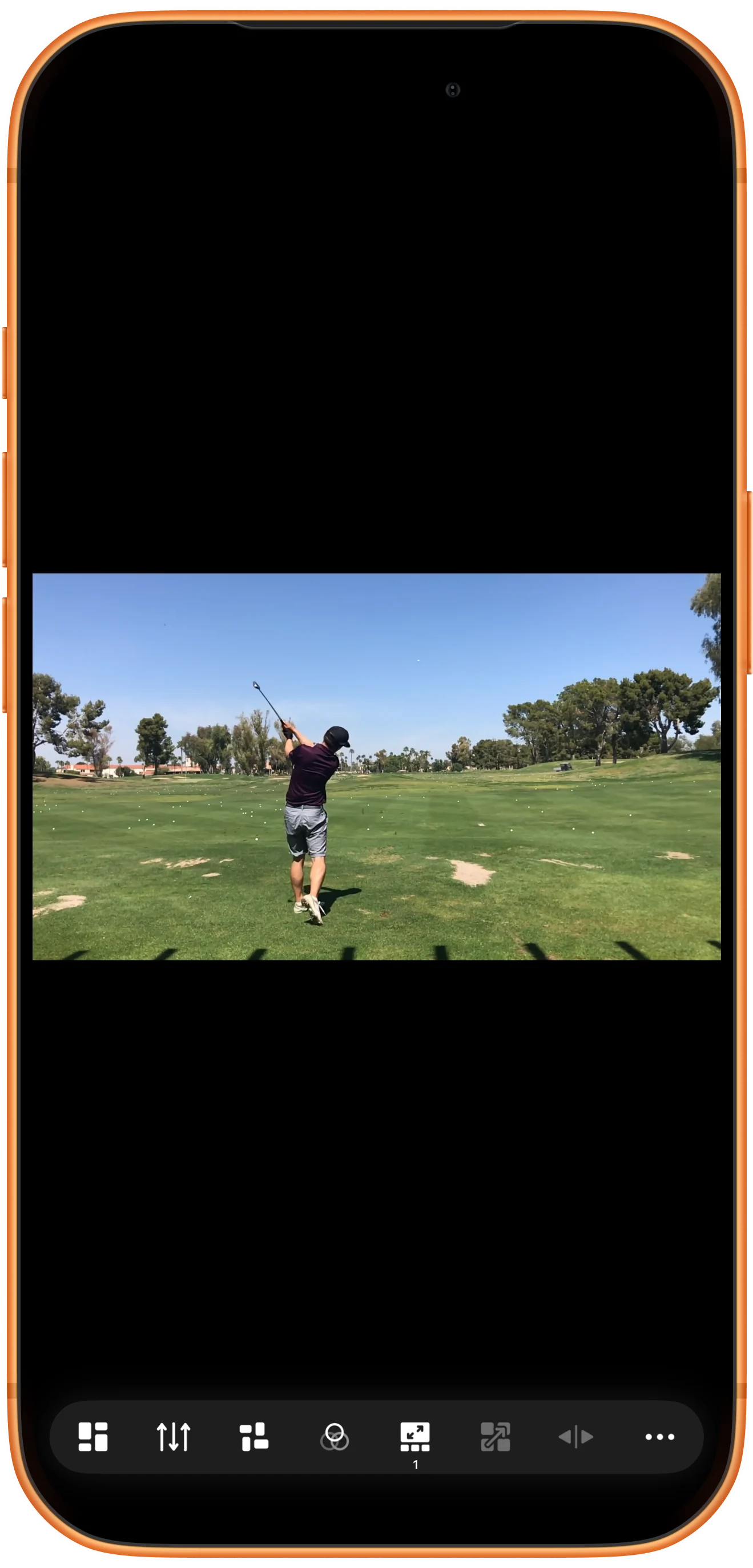
Move to the next enlarged pane
Tap the same button again to inspect the next occupied pane at full size. In this two-video example, the toolbar index changes to 2.
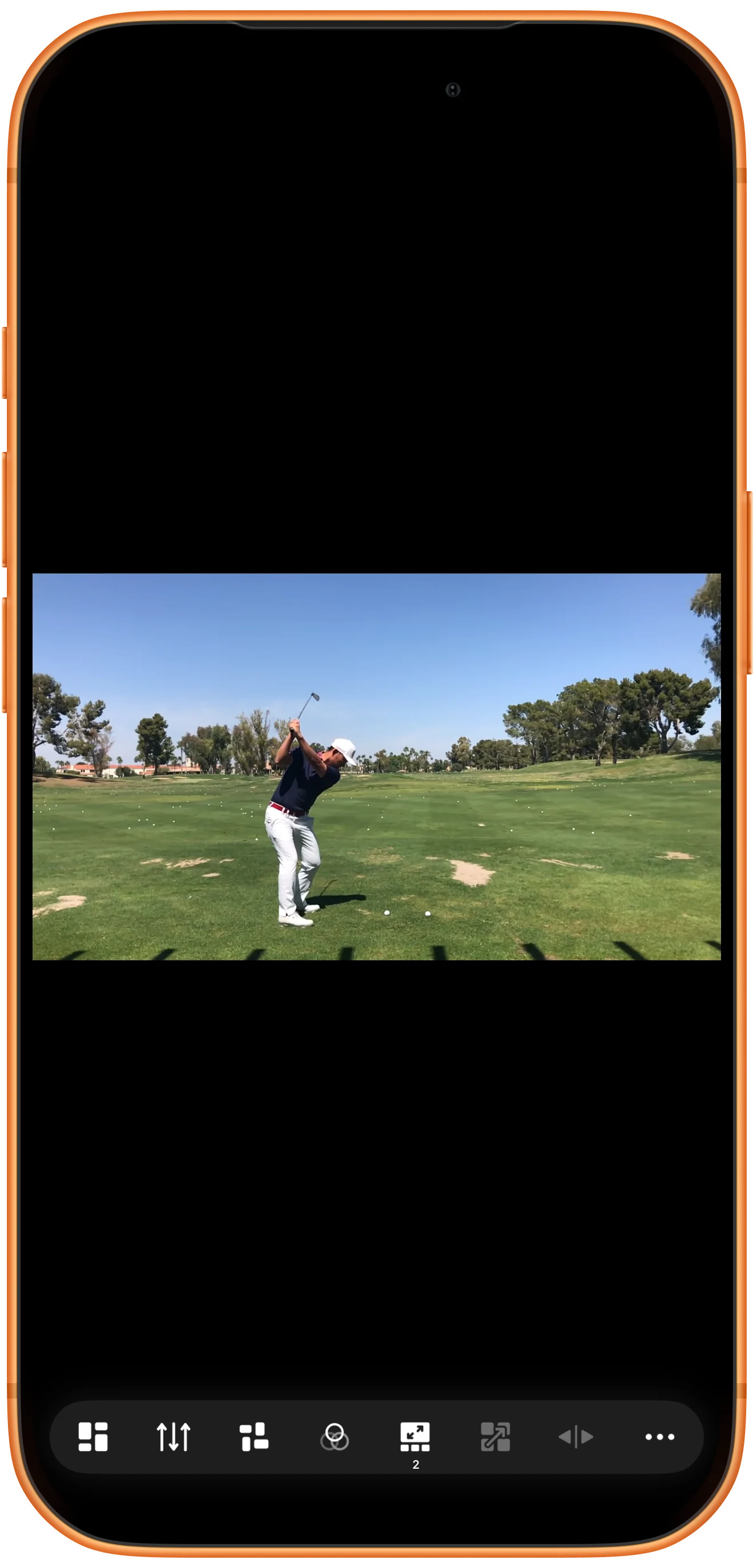
Restore the split-screen layout
With the second video enlarged in this example, tap Cycle Maximize again. Both videos return to their original regions, ready to continue the comparison.

More possibilities
Useful details
Check these details as you follow the steps.
Use it for a closer inspection
Maximizing helps reveal small details that are hard to see in a dense layout. It changes the viewing area, not the source resolution.
Save important arrangements separately
Use a workspace bookmark when you want to reopen the same sources and layout later. Maximizing is a viewing control, not a bookmark action.
Frequently asked questions
Do I need to load the videos again?
No. Returning from maximization restores the existing arrangement; you do not need to reopen each source.
Is this the same as Fill?
No. Fill crops a video within its region. Maximizing temporarily expands the region to use the workspace.
Split Screen Player
Try this with your own media
Open Split Screen Player and follow the steps with files you want to use.